


Structured On-Page SEO Services Delivered by Experienced Optimization Specialists
Secure Block Trading Technologies provides on-page SEO services designed to improve search relevance, crawl clarity, and ranking stability across UAE and GCC markets. Optimization focuses on content alignment, metadata refinement, internal linking structure, and technical consistency.
The team includes experienced SEO professionals who manage on-page frameworks across multiple industries, applying structured audits, keyword mapping, and performance-based refinements aligned with search engine compliance standards.
What is On-Page SEO?
On-page SEO refers to optimizing individual website pages to improve their relevance, structure, and visibility for targeted keywords in search engine results pages. It focuses on aligning page content, metadata, headings, internal linking, and technical elements with search intent and indexing standards.
On-page optimization includes creating structured and relevant content, integrating mapped keywords within titles and headings, refining meta tags, and maintaining logical site architecture. Page layout, navigation clarity, and content hierarchy are also aligned to improve crawl interpretation and user flow.
User experience remains a central component of on-page SEO. Websites must load efficiently, maintain mobile responsiveness, and provide structured content that supports clear engagement pathways. Search engines evaluate these signals when determining ranking placement and relevance.
What Is Included in On-Page SEO Services?
On-page SEO services focus on refining page-level elements that influence search visibility and relevance. Core factors include descriptive and keyword-aligned title tags, optimized meta descriptions, structured header tags, internal linking frameworks, and media optimization through alt attributes. These elements support improved indexing clarity and structured search positioning.
- High-intent keyword research aligned with search volume and manageable competition levels.
- Meta tag optimization designed to improve click-through rates from search results.
- Sitemap creation for both user navigation and search engine crawling efficiency.
- Internal linking frameworks to strengthen site structure and improve crawl depth.
- Heading tag optimization for structured content hierarchy.
- Alt text optimization for images and media assets.
- Comprehensive website SEO audits covering UI, UX, call-to-action placement, and bounce rate analysis.
- Robots.txt setup and refinement for controlled crawling and indexing management.
- Anchor text optimization aligned with mapped keyword themes.
- Content optimization for clarity, relevance, and search alignment.
- Blog structure and content audit for consistency and topical authority.
- Tracking setup including Google Analytics and Search Console integration for performance monitoring.
On-Page SEO Services Overview – Keyword Research
Keyword research identifies the search terms and phrases users enter into search engines. It supports content alignment with search intent and improves visibility within search engine results pages by targeting relevant and data-backed queries.
Importance of Keyword Research in SEO
Keyword research supports alignment between website content and user search behavior.
It helps identify how target audiences search for products, services, or information within search engines.
It provides visibility into competitive positioning and highlights gaps where ranking opportunities exist.
Structured keyword analysis improves content relevance and supports stronger placement within search engine results pages.
Importance of Keyword Research in SEO
The process begins with identifying the target audience and evaluating their search patterns.
A preliminary list of relevant keywords is created based on service offerings and industry categories.
Competitive analysis is performed to identify keyword gaps and ranking opportunities.
Keyword research tools are used to evaluate search volume, competition level, and intent classification.
Keywords with balanced search demand and achievable competition thresholds are selected.
Selected keywords are mapped to website content, title tags, meta descriptions, headings, and URL structures.
Tools Used for Keyword Research
Keyword research platforms include Google Keyword Planner, Ahrefs Keywords Explorer, SEMrush Keyword Magic Tool, Moz Keyword Explorer, Ubersuggest, Keyword Tool, Serpstat, and SpyFu.
These tools provide search volume data, competition insights, keyword difficulty metrics, and competitor strategy analysis.
Additional SEO platforms are used to integrate keyword analysis with on-page optimization frameworks and technical SEO performance monitoring systems.
Meta Tag Optimization
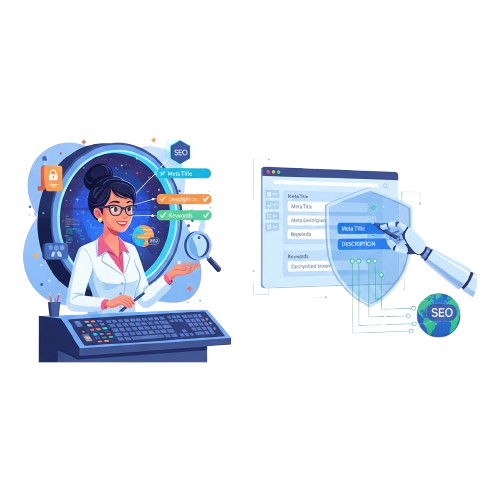
Meta tags are HTML elements placed within the head section of a webpage’s source code. They provide structured information about the page to search engines and influence how content appears in search results.
Meta tags are not visible on the webpage itself but are used by search engines to interpret page context and display titles and descriptions within search engine results pages.
Importance of Meta Tags
Meta tags support search engines in understanding the subject and relevance of a page. Title tags and meta descriptions summarize page content and influence click-through rates from search results.
Well-structured and keyword-aligned meta tags improve contextual clarity, strengthen ranking signals, and enhance visibility within search engine results pages.
How SEO-Friendly Meta Tags Are Written
SEO-friendly meta tags are developed through structured keyword alignment and character-length standards.
Unique and descriptive title tags are created for each page. Titles remain concise, include the primary keyword, and typically stay within recommended character limits to ensure proper display in search results.
Meta descriptions provide a clear summary of page content. They include the primary keyword naturally and are written within recommended length limits to improve click-through potential.
Relevant keywords are integrated based on search intent and page topic alignment. Keyword usage remains natural and contextually accurate.
Duplicate meta tags are avoided to ensure each page communicates distinct content signals to search engines.
Schema markup may be implemented to provide structured data such as reviews, pricing details, or product attributes, supporting enhanced search result presentation.
Sitemap
A sitemap is a structured file that lists all accessible URLs within a website. It supports search engine crawling and indexing efficiency by outlining the site’s structure and hierarchy.
Sitemaps can be generated in XML, HTML, or TXT formats and submitted to search engines to assist in content discovery. They help define relationships between pages and improve crawl prioritization.
Additional metadata such as last modification date, update frequency, and relative page importance can be included. These signals guide search engines in determining crawl scheduling.
HTML sitemaps also assist website visitors by offering a structured navigation overview, often accessible through footer or navigation links.
Optimizations
A robots.txt file provides instructions to search engine crawlers regarding which pages or directories should be crawled or restricted. Proper configuration supports crawl efficiency and prevents indexing of non-essential or sensitive sections of a website.
How Robots.txt Is Optimized
- The process begins by ensuring a valid robots.txt file exists at the root directory of the domain. Absence of this file may result in unrestricted crawling of all accessible pages.
- The “Disallow” directive is configured to restrict access to irrelevant, duplicate, low-value, or sensitive directories such as administrative panels or internal system folders.
- The “Allow” directive is used to ensure search engines can access important pages including homepage, category pages, service pages, product listings, and blog content.
- Wildcards such as “*” may be implemented to define pattern-based rules for directories or file types requiring controlled crawl access.
- After configuration, the robots.txt file is tested through tools such as Google Search Console to confirm correct crawl permissions and indexing behavior.
- Structured robots.txt optimization supports technical SEO by improving crawl prioritization, protecting sensitive content, and maintaining indexing clarity across important pages.
Heading tags (H1, H2, H3, and others) define the structural hierarchy of a webpage. They assist search engines in interpreting content organization and improve readability by separating sections into clearly defined segments.
How Heading Structure Is Optimized for SEO
- The H1 tag is used for the primary heading of the page and aligns with the main topic and primary keyword focus. Only one H1 tag is maintained per page to preserve structural clarity.
- H2 tags are used for major subtopics, while H3, H4, and subsequent levels define nested sections in descending order of importance. This structured hierarchy helps search engines understand the relationship between content segments.
- Headings are written to remain concise and descriptive, accurately reflecting the section that follows. Relevant keywords are incorporated naturally without repetition or over-optimization.
- CSS styling is used to control visual presentation rather than altering heading importance through font size alone. This maintains accessibility standards and mobile responsiveness.
- Heading tags are applied where structurally necessary. Overuse or duplication of heading levels is avoided to preserve logical content flow and indexing clarity.
Alt text, or alternative text, is a descriptive attribute added to images within a webpage’s HTML. It explains the content of the image to search engines and supports accessibility for users relying on screen readers.
Alt text optimization improves search engine understanding of visual elements and contributes to structured on-page SEO.
How Image Alt Text Is Optimized
- Descriptive text is written to clearly represent the image content. Language remains accurate and aligned with the surrounding page topic.
- Alt text is kept concise and avoids unnecessary wording while still providing meaningful context.
- Relevant keywords are incorporated when naturally aligned with the image and page theme, without overuse or repetition.
- Context is considered to ensure the alt text reflects the section in which the image appears. Generic or unrelated descriptions are avoided.
- Alt attributes are included for all images to maintain accessibility standards and indexing clarity.
- Proper formatting such as correct capitalization and punctuation is applied to maintain readability.
- Structured alt text optimization supports both accessibility compliance and improved search interpretation of visual content.
Content optimization is the process of improving website content to increase its search engine visibility and attract more relevant traffic.
Here is how we optimize your website’s content for better SEO
- Conduct keyword research: We identify relevant keywords your target audience is using and incorporate them naturally into your website content.
- Create high-quality content: We ensure your content is original, informative, well-structured, and aligned with user intent.
- Optimize headings: We use clear and descriptive headings (H1, H2, H3) that include primary keywords and define proper content hierarchy.
- Use internal and external links: We add internal links to connect related pages and external links to authoritative sources where relevant.
- Use multimedia: We include images and videos where appropriate and apply descriptive alt text for SEO and accessibility.
- Ensure readability: We structure content with short paragraphs and clear language to improve user experience.
- Update content regularly: We review and refresh content to keep it accurate, relevant, and aligned with current search trends.
Internal linking refers to the practice of linking one page of a website to another page within the same domain. It plays an important role in on-page SEO and overall website structure.
Here is why internal linking is important for SEO
- Helps search engines crawl and index pages: Internal links guide search engine crawlers through your website. When crawlers follow these links, they discover new pages and better understand the site’s structure and hierarchy.
- Improves website navigation and user experience: Internal links help users move between related pages easily. This improves navigation flow and encourages users to explore more content within the website.
- Distributes link equity: Link equity is the value passed from one page to another through links. Internal linking helps distribute this value across important pages, supporting overall ranking potential.
- Enhances keyword relevancy: Linking related pages together helps search engines understand topical relationships and keyword associations within the website.
- Increases page authority: Internal links from stronger pages can support weaker pages by passing authority signals, helping improve their ranking potential.
- Internal linking supports structured website architecture, improves crawl efficiency, strengthens topical alignment, and enhances overall search visibility.
How Do We Optimize Websites for Better On-Page SEO Scores?
To optimize a website for a better on-page SEO score, we focus on aligning the website with user intent and search relevance. The process begins with keyword research to identify relevant and high-value keywords. This helps create content that matches what the target audience is actively searching for.
Once keywords are finalized, we optimize meta tags and page content. Title tags and meta descriptions are refined to clearly explain the page topic. Content is structured using headings, proper keyword placement, image alt text, and readable formatting to improve clarity and engagement.
Technical SEO factors are also addressed. Page speed is improved by compressing images, reducing unnecessary code, and enabling caching. The website is reviewed for mobile responsiveness and navigation clarity to ensure consistent usability across devices.
Performance tracking is set up using tools such as Google Analytics and Google Search Console. These tools help monitor traffic, indexing, and engagement metrics, allowing structured improvements based on measurable data.
Optimizing for stronger on-page SEO scores requires consistent refinement of content, structure, technical stability, and user experience alignment.
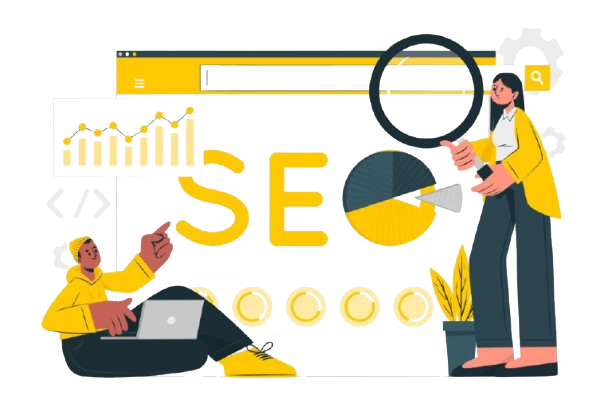
Why On-Page SEO is Important?
On-page SEO is a core component of any search engine optimization strategy. It involves optimizing individual web pages to improve their visibility in search engine results pages and attract relevant organic traffic.
One key reason on-page SEO is important is that it helps establish topical relevance and content authority. When pages are structured correctly with aligned keywords, optimized headings, and clear metadata, search engines can better understand the subject of the page. This improves the likelihood of ranking for targeted search terms.
On-page optimization also supports credibility. Well-structured, relevant, and informative content signals quality to both users and search engines. Over time, this contributes to improved visibility and stable ranking performance.
Another advantage of on-page SEO is that it allows smaller businesses to compete in competitive markets. By focusing on keyword alignment, content clarity, and technical refinement, websites can improve their ranking potential without relying solely on scale or brand size.
Why Choose Secure Block Trading Technologies for Structured On-Page SEO Services
If structured on-page SEO execution is required to improve online visibility, Secure Block Trading Technologies delivers process-driven optimization aligned with measurable ranking objectives. Many businesses face reduced search performance due to incomplete or inconsistent on-page implementation.
The team evaluates core website elements including structure, content alignment, metadata, titles, headings, internal linking systems, image optimization, and crawl clarity. Based on this assessment, a defined action plan is created to address identified gaps affecting search engine positioning.
On-page optimization services include refining content structure, improving meta descriptions and title tags, strengthening internal linking frameworks, and enhancing page-level technical elements that influence ranking placement.
Optimization strategies are developed after reviewing business goals, target audience intent, and competitive positioning. Execution follows documented workflows supported by transparent reporting and performance tracking systems.
Structured SEO service packages are available, including on-page optimization, off-page authority development, and content marketing frameworks designed to support consistent search growth across competitive markets.

Why Choose Secure Block Trading for SEO Services

14+ Years of SEO Experience
Proven expertise in delivering effective SEO strategies.

Award-Winning SEO Agency
Recognized for excellence in search engine optimization.

1,000+ Projects Completed
Extensive track record of successful SEO campaigns.

High Job Success Score
98% client satisfaction and measurable results.

Top-Rated Professionals
Trusted and highly rated SEO team with global experience.

Experienced Team
Over 25 SEO specialists dedicated to driving growth.

Dedicated Project Managers
Personalized attention to ensure smooth execution.
Advanced SEO Tools
Data-driven strategies powered by industry-leading tools.

White-Hat SEO Techniques
Ethical SEO practices with full transparency.

Global Client Experience
Successfully serving businesses across various countries.
Competitor Analysis & KPI Monitoring
Tracking industry benchmarks to stay ahead.
Affordable & ROI-Focused
Competitive pricing designed to maximize your return.
Frequently Asked Questions (FAQs)
1. What is on-page SEO?
On-page SEO refers to optimizing individual web pages to improve their visibility in search engine results. It includes refining content, headings, meta tags, internal links, and technical elements within the website.
2. What are the key elements of on-page SEO?
Key elements include keyword research, title tag optimization, meta description refinement, heading structure (H1–H3), internal linking, image alt text, content quality, URL structure, page speed, and mobile responsiveness.
3. How does on-page SEO differ from off-page SEO?
On-page SEO focuses on elements within the website that can be directly controlled, such as content and structure. Off-page SEO focuses on external signals like backlinks, brand mentions, and citation building that influence authority and trust.
4. What are some best practices for on-page SEO?
Best practices include using relevant keywords naturally, writing clear and structured content, optimizing meta tags, maintaining logical heading hierarchy, improving page speed, ensuring mobile compatibility, and avoiding duplicate content.
5. Why is on-page SEO important?
On-page SEO helps search engines understand the relevance and context of a webpage. Proper optimization improves ranking potential, increases organic visibility, and enhances user experience.